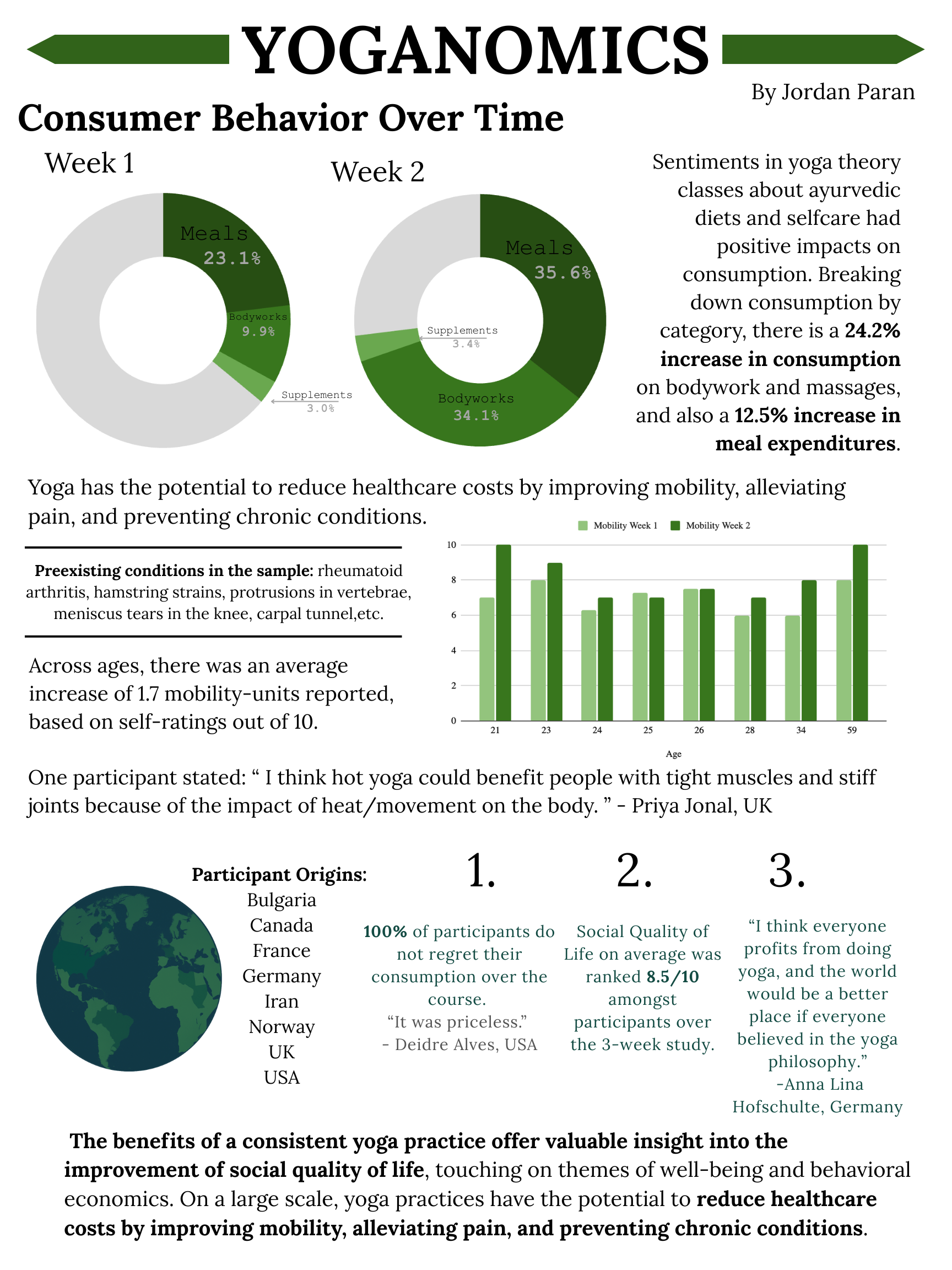
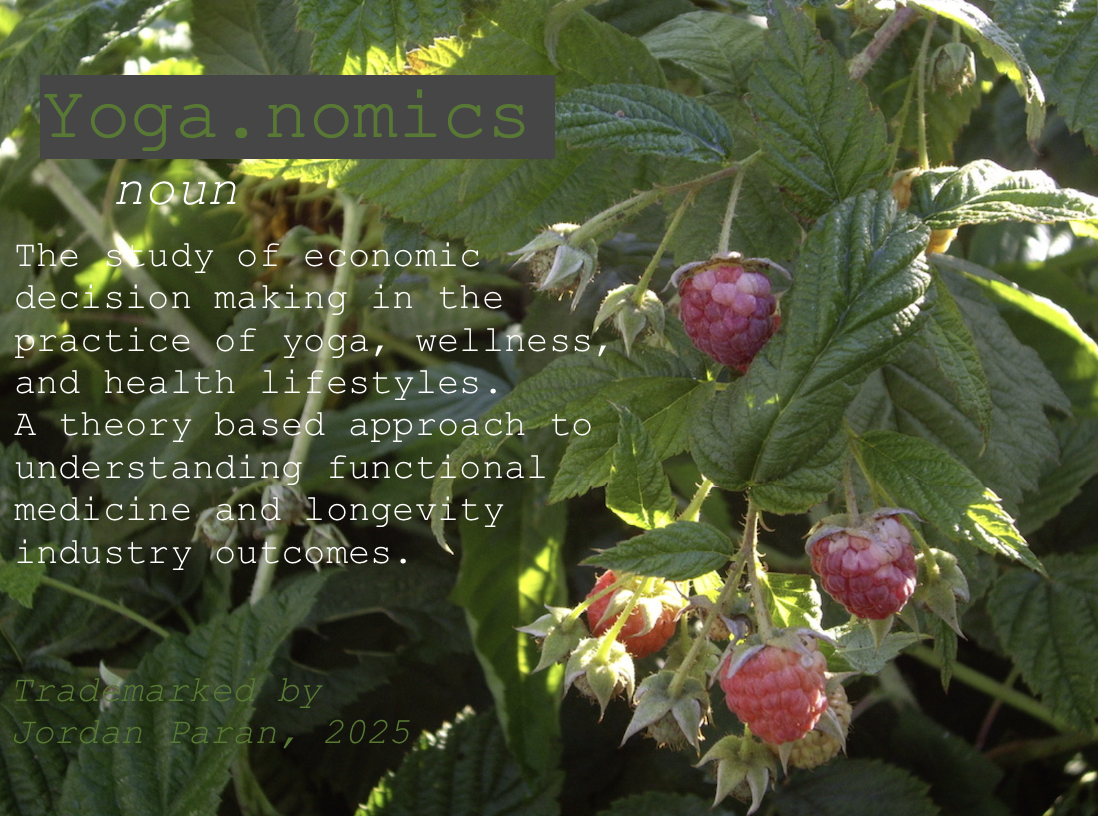
Following graduation and my first job post-grad, I solo-traveled to three countries: Indonesia, Thailand, and Japan. I was deeply curious about the intersections of wellness tourism and how it aimed to relieve prominent chronic conditions found in Western countries. During completion of my 200-Hour Yoga Alliance Teacher Training, I interviewed yogis from around the world about their motivations for joining, spending on yoga, career intentions, and their perceived physical and mental health changes. I named this research: Yoganomics.
An individual’s yoga practice is a sacred and deeply interpersonal relationship between body and mind. Beyond its mental and physical dimensions, the benefits of a consistent practice offer valuable insight into the social quality of life, touching on themes of well-being and behavioral economics. On a larger scale, fascia-focused yoga practices have the potential to reduce healthcare costs by improving mobility, alleviating pain, and preventing chronic conditions. This highlights yoga’s broader societal value: not only is it an accessible, low-cost form of exercise, but its adoption at the macro level could yield significant public health and economic benefits.